What Are Mudras & Why Are They Used in Yoga?
IMPORTANT: The information in this post should not be taken as medical advice. If you have concerns about your health, please consult a medical professional.
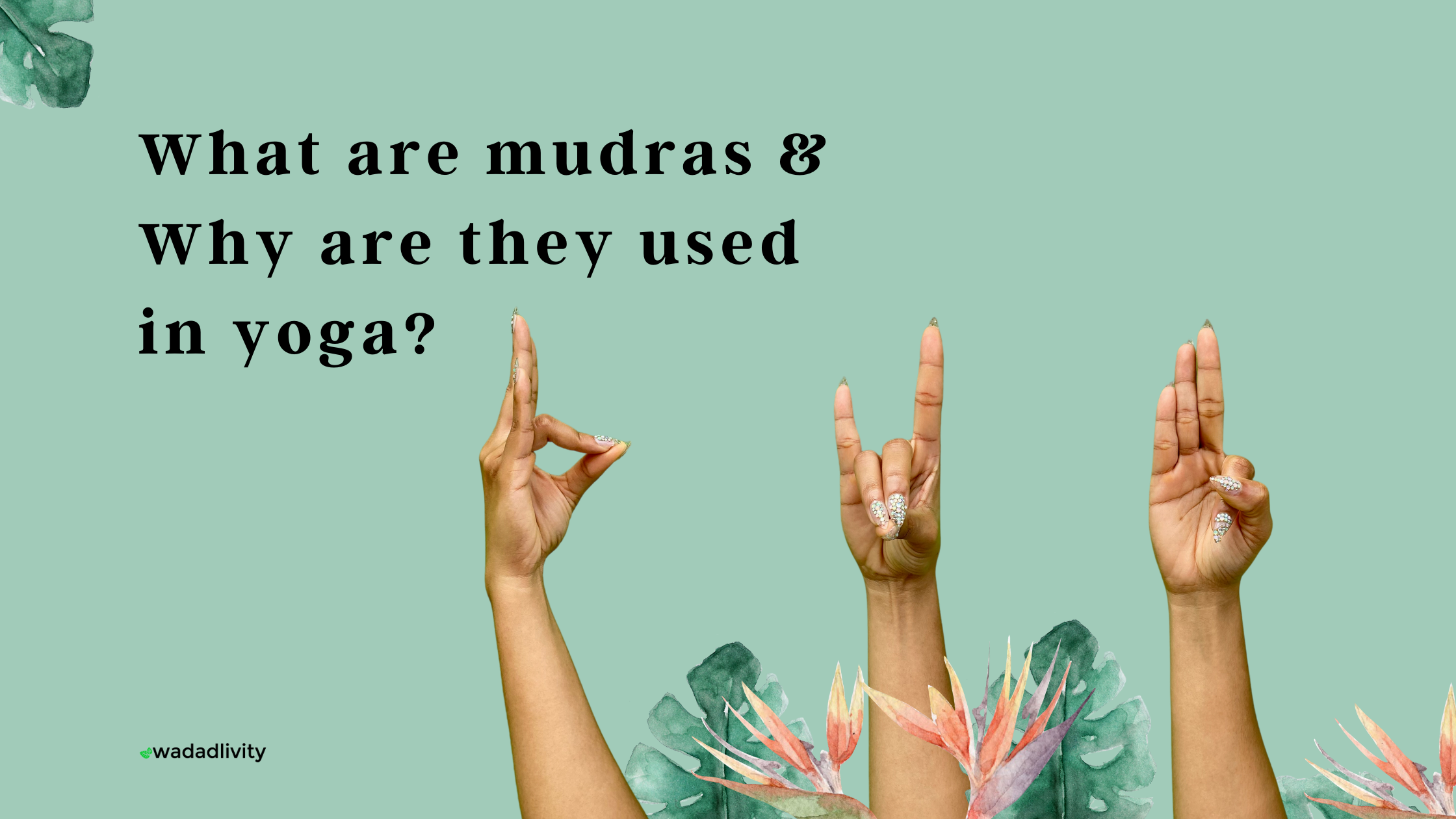
Imagine someone meditating. What do their hands look like? Chances are, you pictured the fingertips of their thumb and index fingers pressed together. This is known as a mudra.
Mudras can be observed in ancient cultures and religions around the world - from Egyptian hieroglyphics, to Hinduism, Buddism, Taosim and Christianity. In Sanskrit, the word ‘mudra’ is translated as seal, gesture, or mark. Yoga mudras are symbolic gestures often practiced with the hands and fingers. They facilitate the flow of energy and promote deeper meditation.
Each finger represents a different element and the way the fingers are connected in a mudra indicates where we want to direct our energy.
The thumb represents fire and the universal soul or consciousness
The index finger represents air and the individual soul
The middle finger represents space and the ego
The ring finger represents earth and illusion
The little finger represents water and karma
When these five elements are balanced, we keep energy flowing through our body and create strong inward connections. When the elements are unbalanced, we experience physical and emotional dis-ease. Mudras are an important part of Ayurvedic philosophy and may be used to help treat physical ailments.*
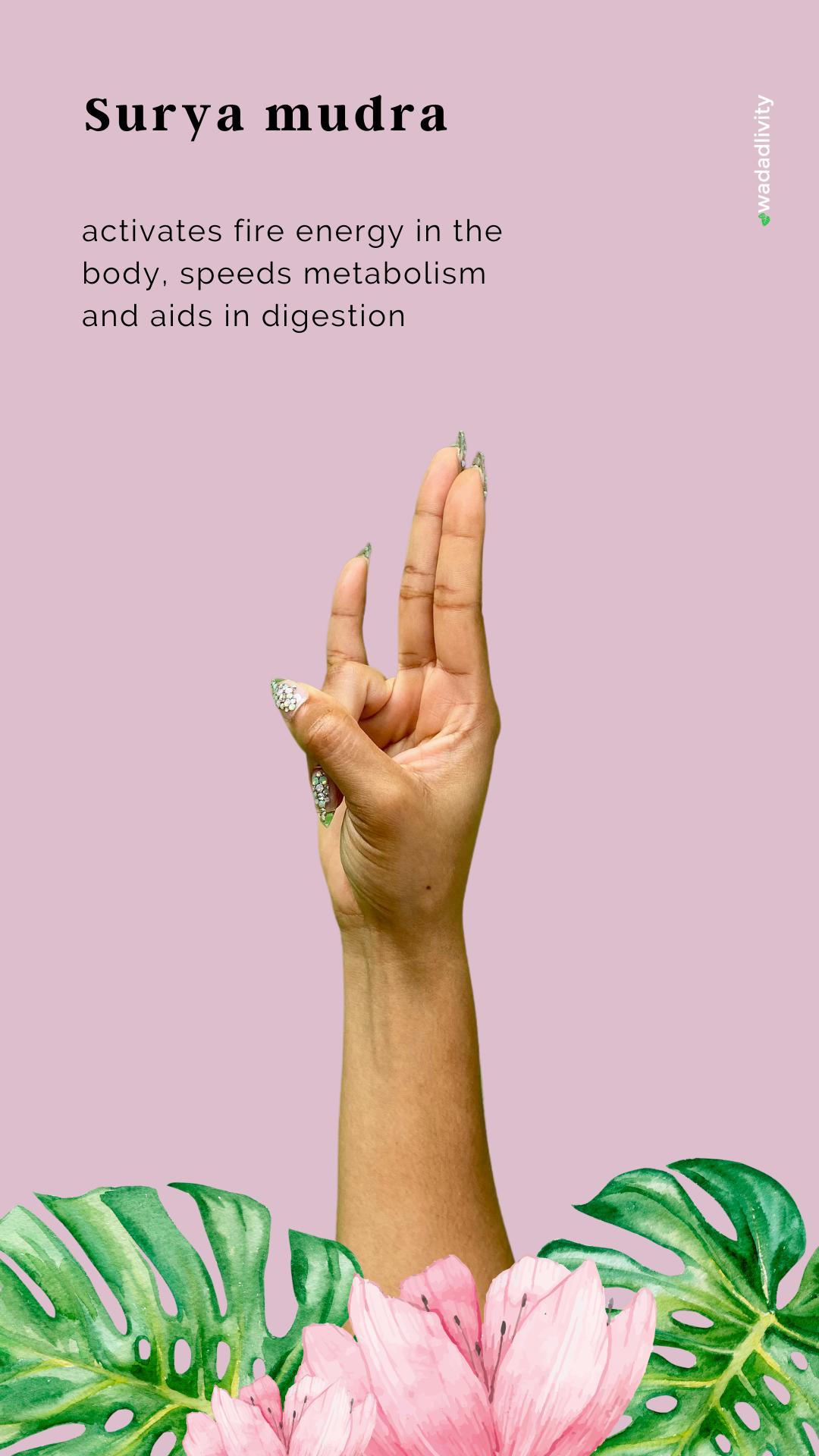
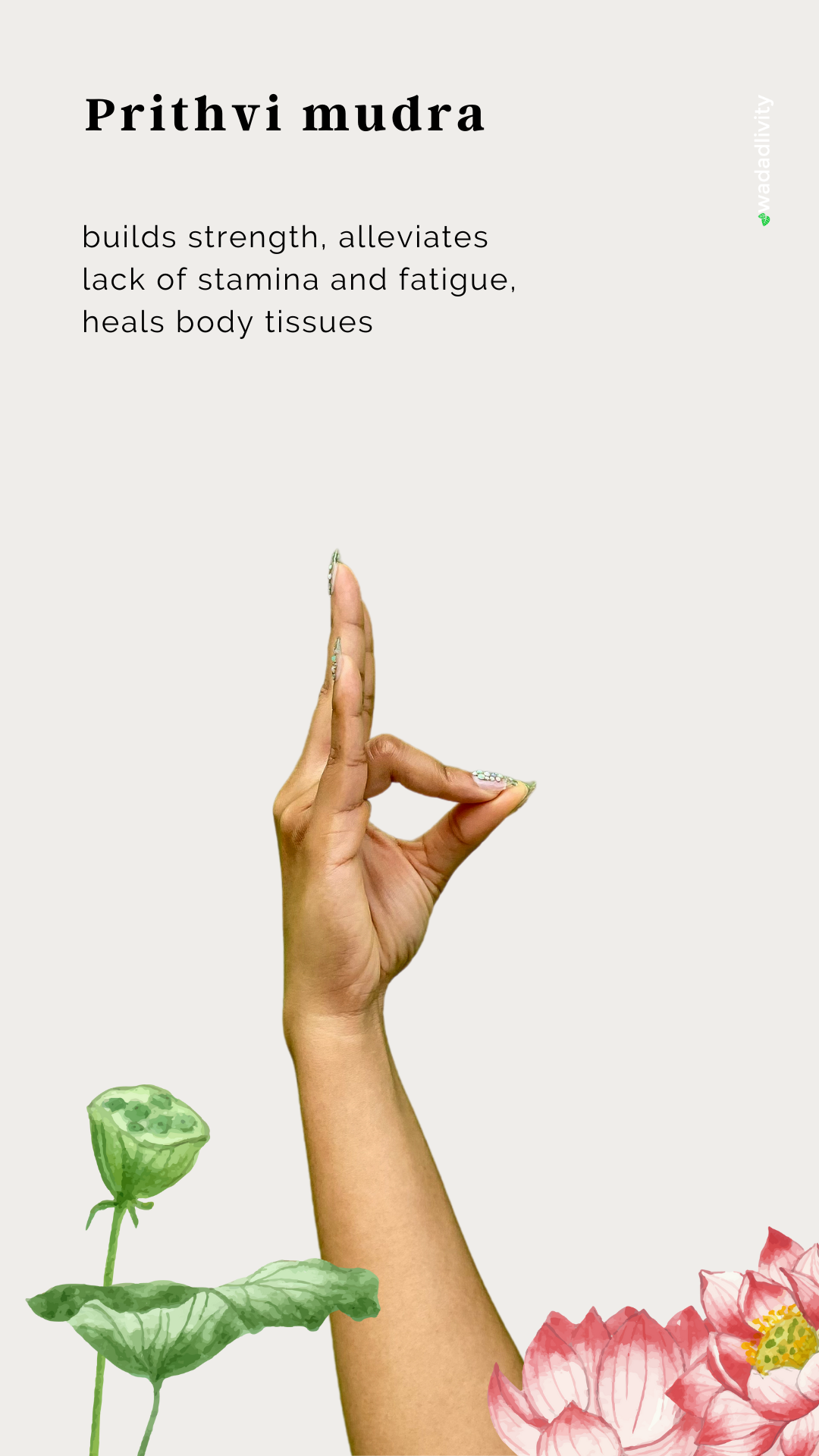
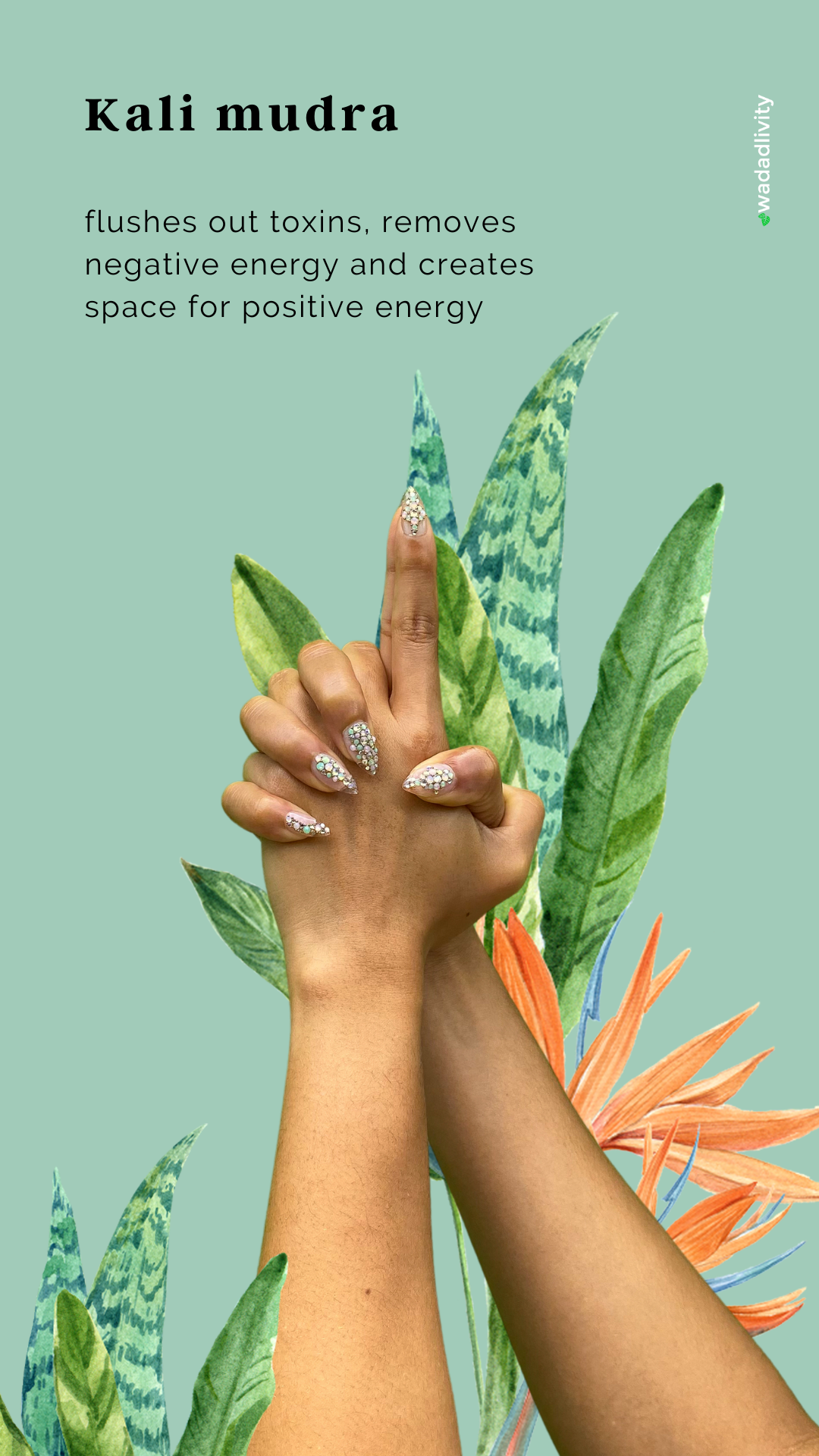
Click on the images below to learn about some popular mudras and their benefits. When practicing a mudra, your fingers do not need to be perfectly straight and you do not need to apply excessive pressure. Gently make contact using your fingertips, relax and try to maintain a consistent connection for the duration of the posture.
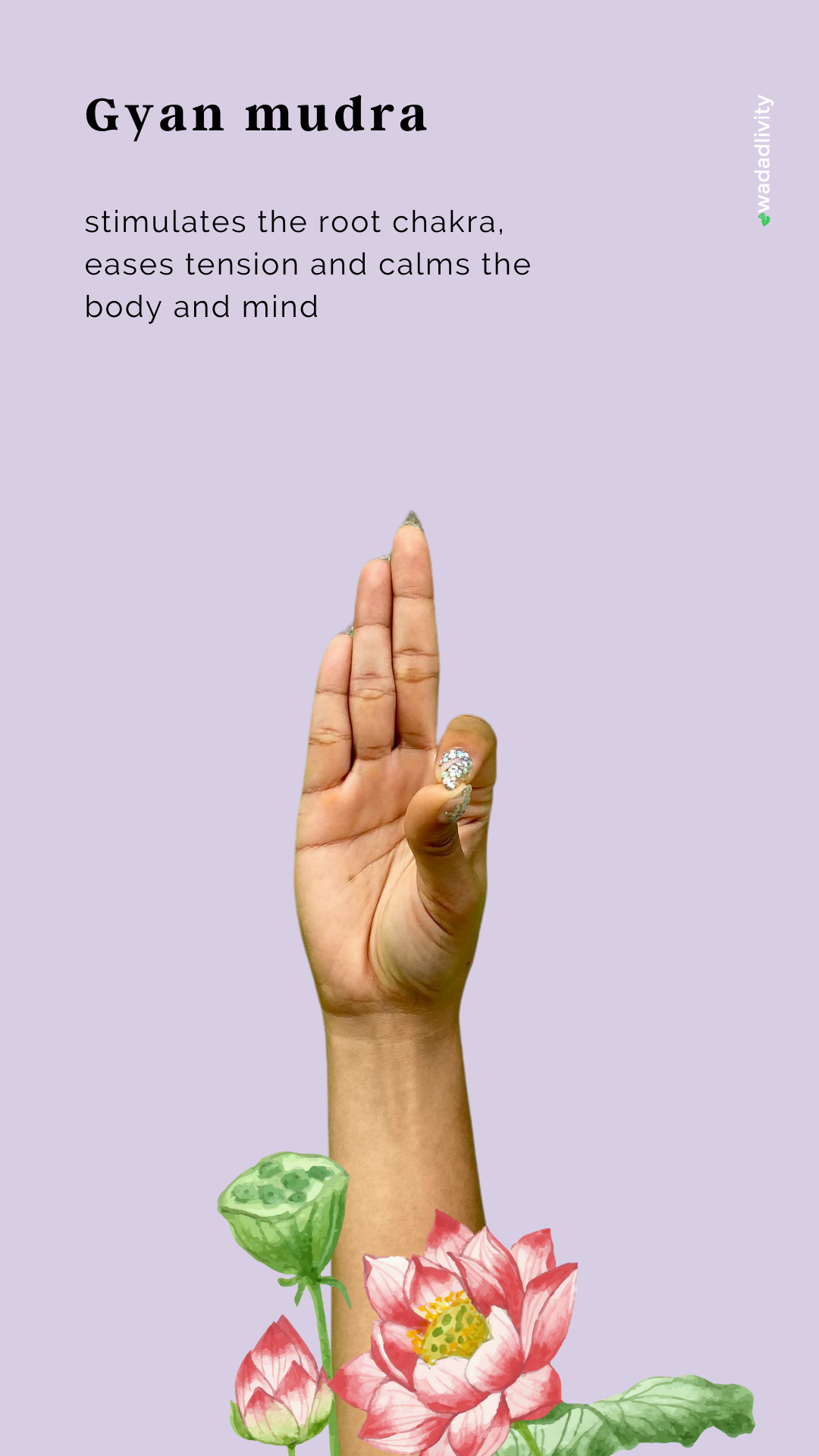
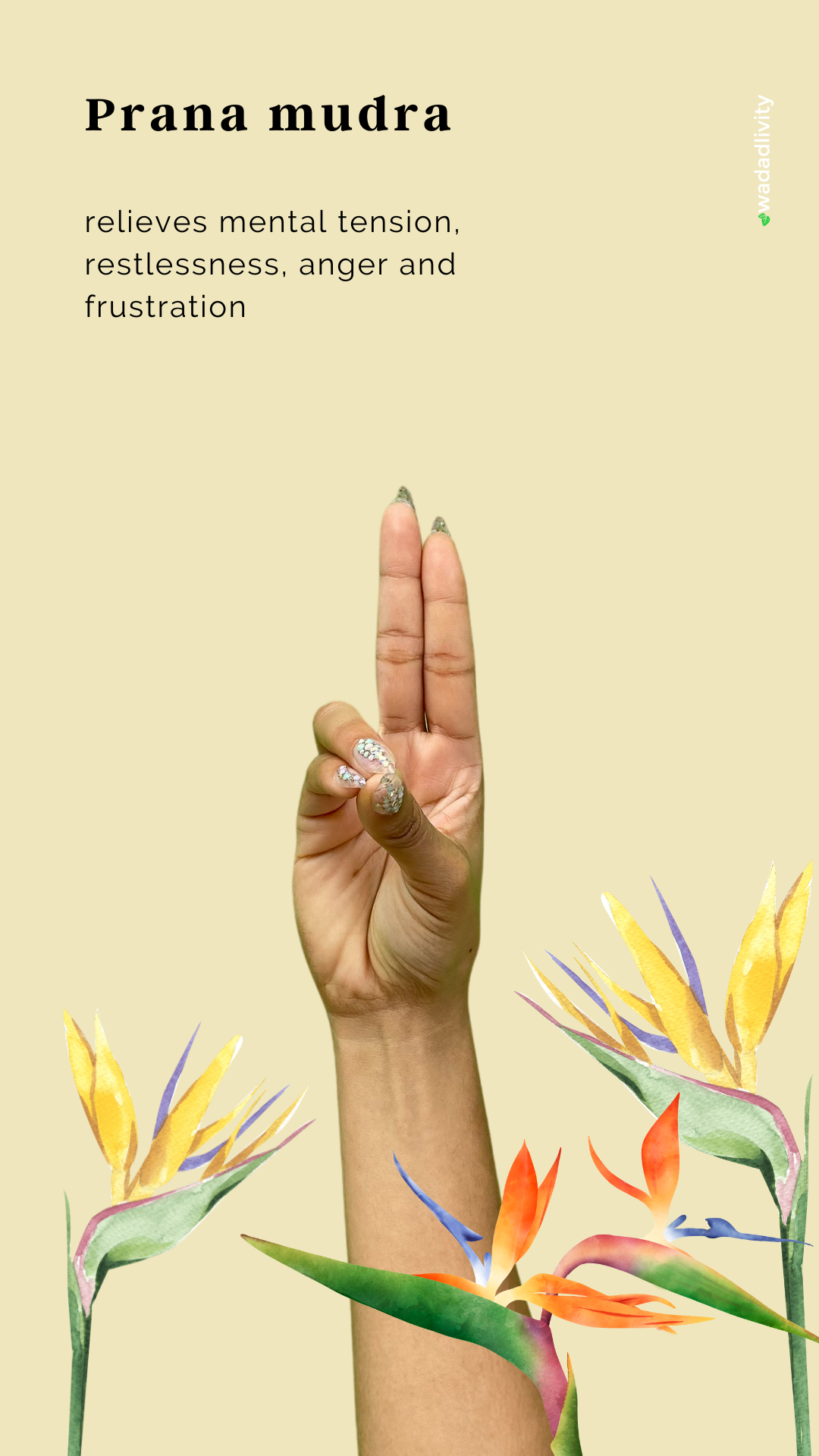
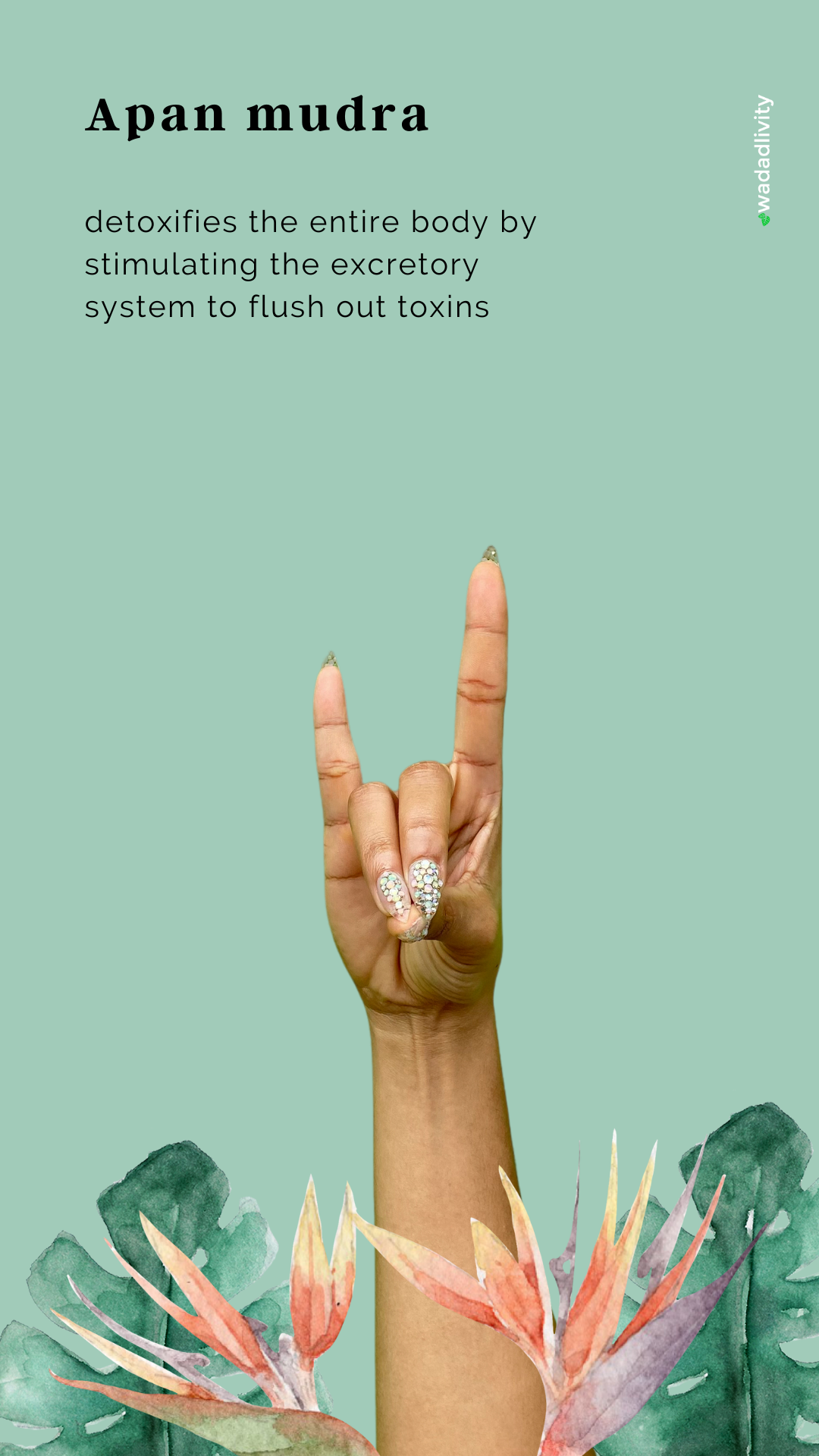
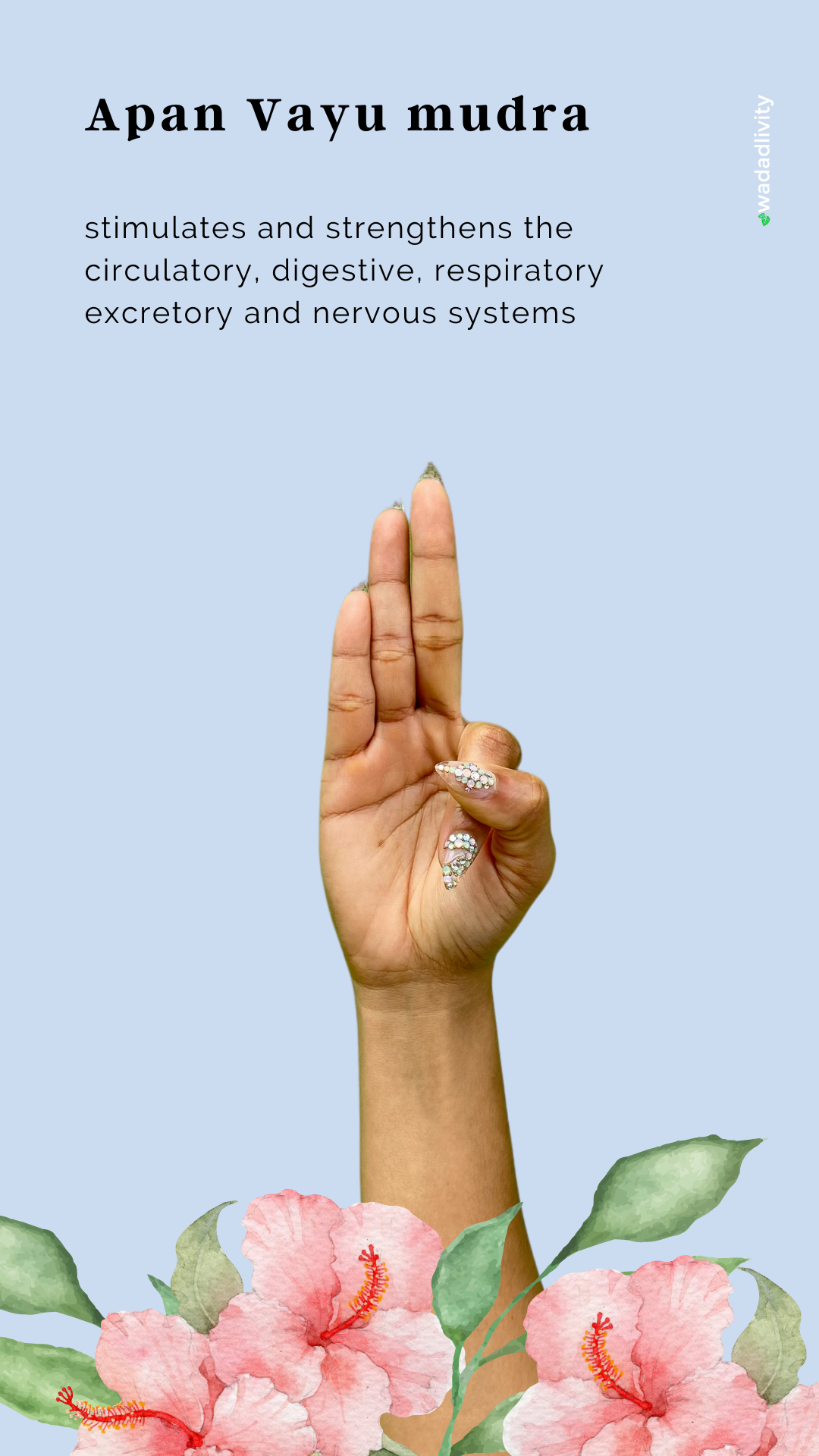
Meditation can be challenging, but using mudras may help to focus your attention. Gyan mudra is probably my favourite mudra for meditation because of its calming effect. Mudras can also be incorporated into yoga asana (body postures) to enhance the benefits of a pose. I love using Kali mudra in standing postures like Virabhadrasana I (Warrior I) and tadasana (mountain pose). The next time you meditate or practice asana, try a mudra and see whether you notice any difference.