
Why is Incense Used in Yoga?
When you close your eyes and imagine a yoga class, one or more of the following objects may come to mind: mats, blocks, blankets, incense. But why is incense used in yoga?
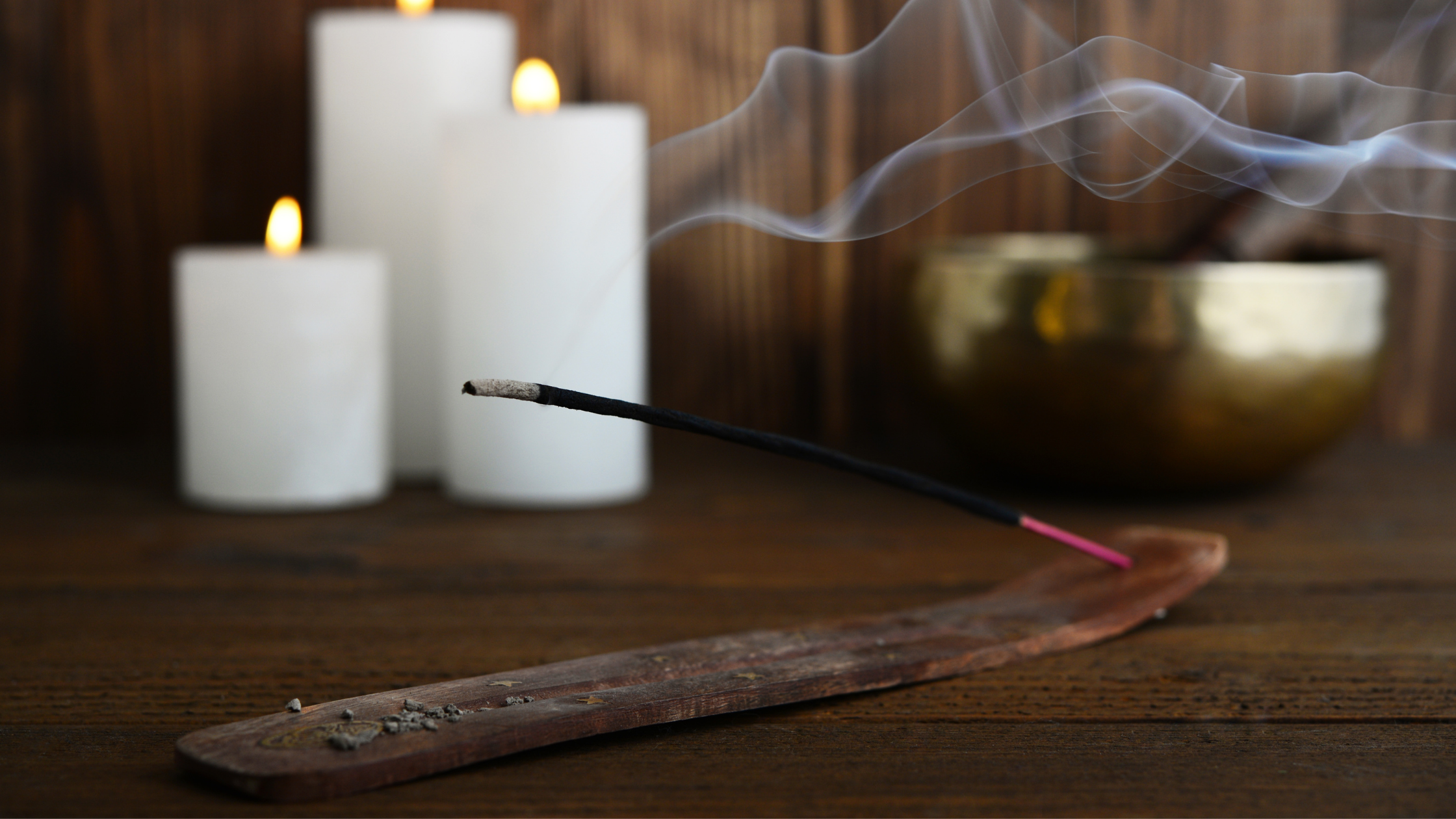
Stick of incense in a wooden holder
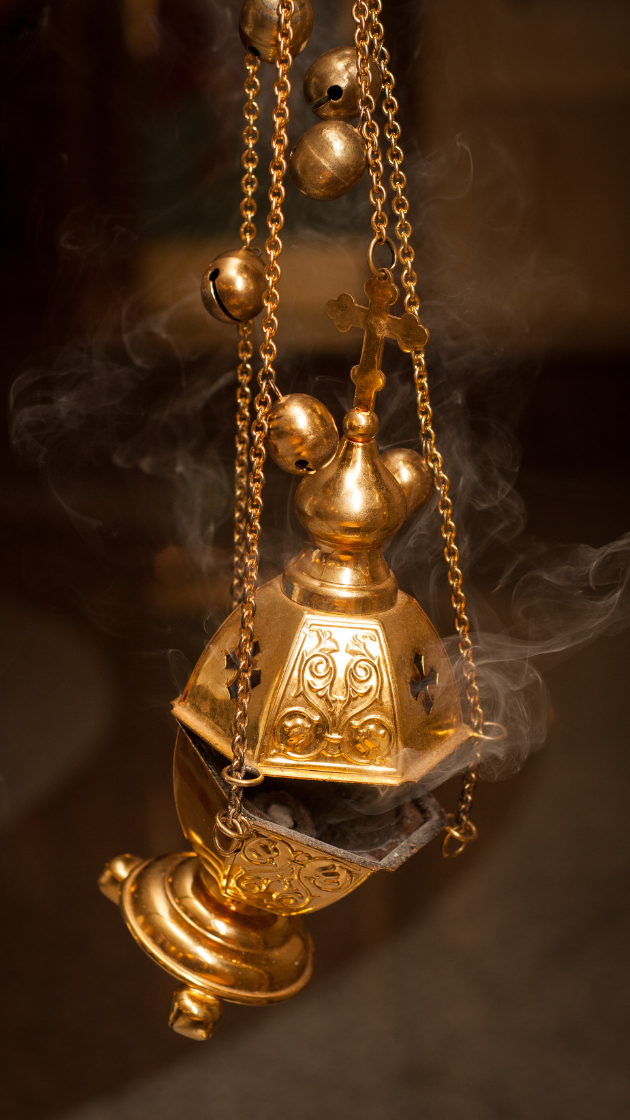
My first memory of incense was at church. I remember watching the server stride up the center aisle, slowly swinging the censer from side to side, thin streams of grey-white smoke swirling in the air. Depending on where we sat, the incense could be a nuisance, but for the most part I enjoyed watching the shapes the smoke made as it floated up into the rafters.
Burning incense is an important part of Anglican mass, but the ritual is not exclusive to Christianity. Many other religions and cultures burn incense to purify a space before a ceremony or as a form of healing*.
Types of Incense
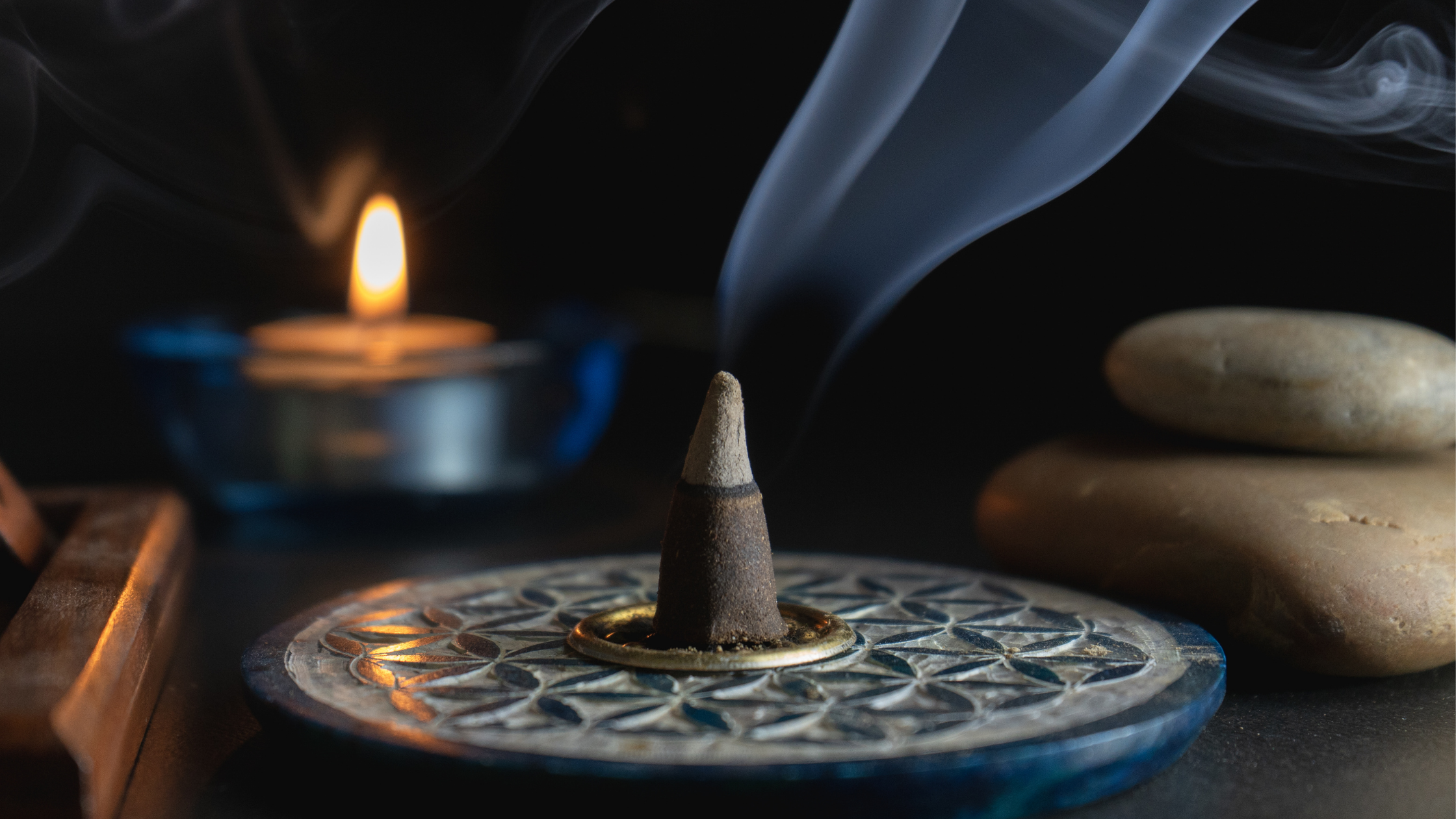
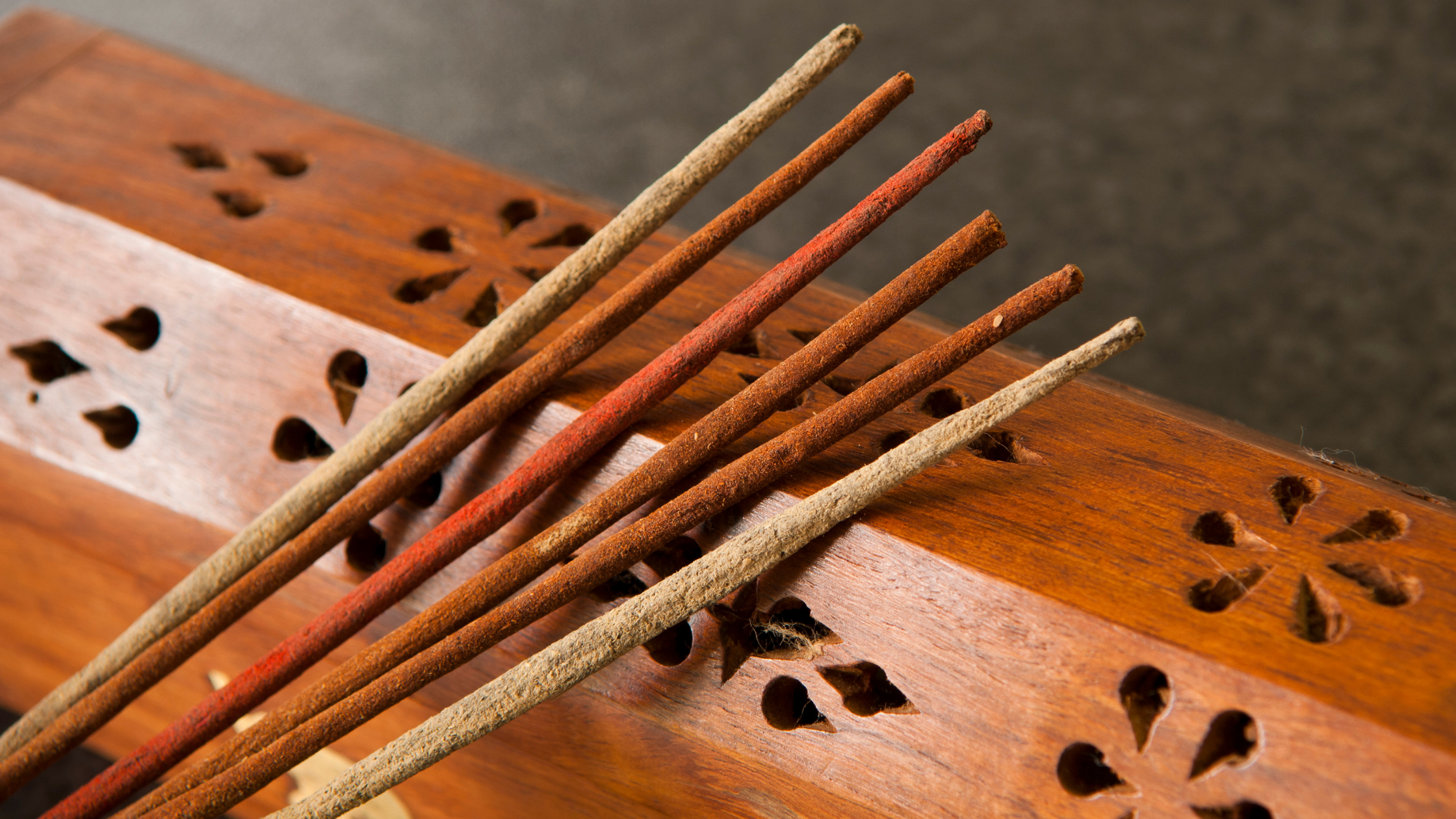
Incense is typically made from a combination of wood, oils and resins and comes in a wide variety of scents. Other materials are added to control combustion and facilitate a smooth, slow burn. Incense sticks are probably the most popular form of incense. Since incense sticks tend to have milder aromatic release, some people choose to burn multiple sticks at once. Incense cones are also common, but they burn faster than incense sticks and the fragrance tends to dissipate more quickly.
Incense grains (aka resin) are the original form of incense - made by combining natural gums, plants and waxes. To burn incense grains you will need a censer or some other metal or clay burner and coals. Burning incense grains over coals is more ceremonial and generates a stronger aroma and more smoke than sticks or cones.
In terms of fragrances, frankincense is my favorite, but sandalwood, opium and jasmine are nice too. Each fragrance has its own vibe and benefits. For example, frankincense supports protection, purification and spiritual awareness and may serve as an antidepressant*.

How & When to Use Incense
Burning incense is fairly common in yoga and meditation classes. It is used to cleanse the room before the session and depending on the fragrance, it may help students to focus or relax. Incense smoke contains particulate matter, so it’s important to know whether students have asthma, allergies or other sensitivities. Even if there aren’t any health concerns, it doesn’t guarantee your students will enjoy incense during their class.
Ideally, incense should be burned in a well ventilated room 30 minutes before the class begins. When done in this way, you can purify the air and add a subtle fragrance without exposing students to smoke.
Tip: Essential oil diffusers are a convenient alternative to burning incense. You still have to be mindful of allergies, but it’s generally safer for persons with respiratory issues.
*As always, please consult a licensed medical professional before attempting anything you see on this website. The information in this article does not constitute medical advice. Please consult a healthcare professional if you are concerned about your health.